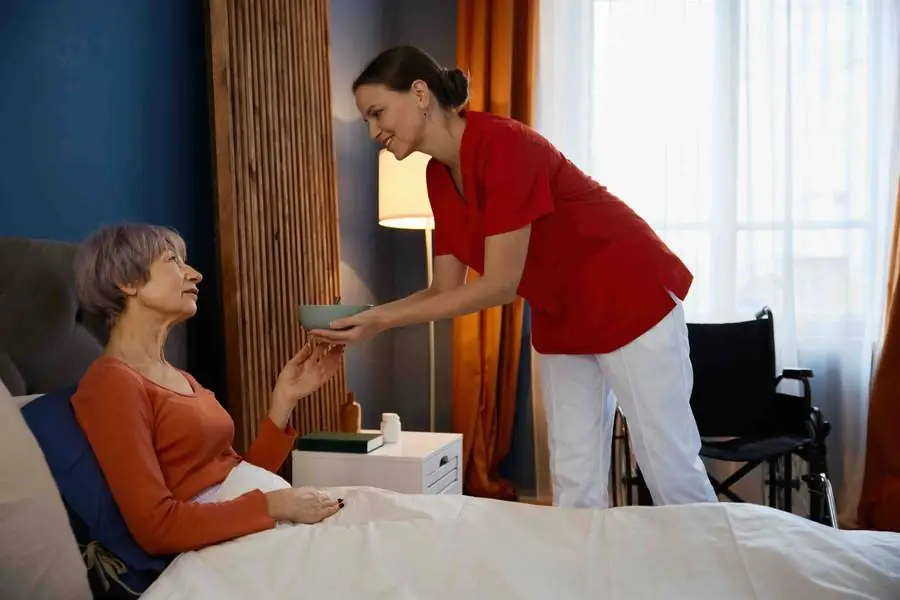
Live-in care at home.
A live-in carer supports one person or a couple in their own home. The work covers personal care, household tasks and emotional support. The aim is simple and steady care that fits the person's routine.

What a live-in carer does.
- Helps with washing, dressing and moving safely around the home
- Prepares meals and keeps the kitchen tidy
- Manages light cleaning and laundry
- Reminds the person to take tablets on time and notes any change in routine
- Provides company: calm conversation, a short walk, help with favourite activities
These small moments build trust and reduce stress for the person and their family.

How live-in care works.
A room of their own
You provide a private room with a bed, storage and space for the carer's belongings. Meals come from the household food supply.
Set breaks every day
The carer follows a planned work pattern with set breaks each day.
Nights
Sleep-in: the carer rests but can respond if the person needs help. Waking nights: the carer stays awake.
Respite care or live-in care?
Choosing care for a loved one is a practical decision and an emotional one.
Respite care
- How long
- A few hours, days or weeks
- Main goal
- Give the family carer a planned break
- Where
- The client's home, or a short stay
- Support
- Flexible and temporary
Live-in care
- How long
- Continuous, long-term
- Main goal
- Ongoing, one-to-one care at home
- Where
- The client's home, with the carer living there
- Support
- High, consistent and personal

The same familiar face.
Consistency is just as important as personalisation. At Soma, we work to keep the same carer with you, which is what you want when you join a Live-in care company. Familiarity makes care smoother and builds trust between the carer, client, and family. When the same person visits, they know routines, recognise small changes, and respond quickly when something feels different. This steady relationship gives clients confidence and helps families relax, knowing their loved one is supported by someone they already know and trust.
Live-in care suits people with limited mobility, people at high risk of falls, people living with dementia and people coming home after surgery.
Personal, not preset.
Soma focuses on people, not preset plans. Before care begins, we take time to understand each person’s habits, preferences, and needs. Some clients want help with daily routines, others value company or support with hobbies and errands. Every plan reflects these details. By working closely with families, we make sure the support feels natural and respectful. The goal is simple: to help people live safely and comfortably at home, with care that fits who they are.
As a Live-in care company, we do this through careful matching, open communication, and ongoing support. Our team checks in regularly to make sure every plan is working well and adapts when needs change. We offer the same standards other companies promise such as: trained carers, reliable cover, and consistent support, but we take it further by keeping care personal and consistent. Every decision, from who provides the care to how it is delivered, is made to protect comfort, trust, and peace of mind.
Preparing for your first care assessment.
It is not a test or a checklist. It is a conversation. A few details ready in advance help the visit feel relaxed.
Medical information
- Current medicines, with doses and times
- Allergies or dietary restrictions
- GP and specialist contact details
- Recent hospital discharge papers
Daily life
- What a normal day looks like
- People who visit or call regularly
- Clubs, faith groups, pets, special dates
- Who we contact first, and how
Paying for live-in care.
You might pay yourself, or the council, a direct payment or NHS Continuing Healthcare might fund some or all of it. We explain the options at the free assessment.
Questions families ask.
Does the carer need their own room?
Yes. The carer needs a private room with a bed, storage and space for their belongings.
Can live-in care start after a hospital stay?
Yes. Recovery often improves when the person rests in their own bed.
Can we start small and increase later?
Yes. A good plan starts at the level of need and scales as things change.
Can home care handle dementia?
Often yes, with a plan built around routine and familiar carers.
Support stays close, and the person stays home.
A free care assessment is the first step. There is no obligation.